
R.A. BROWN RANCH | HORSE LEGACY
A Legacy in the Saddle
Nearly a Century of Purpose-Bred Quarter Horses
At R.A. Brown Ranch, good horses have never been a side interest. They have always been essential partners in the work, the people and the progress of the ranch.
Long before the American Quarter Horse Association was founded—and before the breed even had an official name—the Brown family was raising horses with the speed, cow sense, stamina and disposition needed to make a hand. Nearly a century later, that commitment remains firmly in place. Each generation has built upon the one before it, preserving the traits that have proven their value while thoughtfully adding the genetics needed for the future.
This is more than a history of notable stallions and pedigrees. It is the story of a family continually breeding horses for a purpose: to be capable ranch partners, willing athletes and the kind of horses people are proud to own.
Here Before the Breed Had a Name
When R.A. Brown Sr. returned from Texas A&M to manage the Throckmorton ranch in the late 1920s, horses were central to daily life. His appreciation for an athletic horse extended beyond ranch work. Drawing from his experience playing college polo, he organized a team of local cowboys. Family stories tell of the men riding or driving their polo ponies more than 75 miles to compete in a match—and then making the long trip home. Even then, the Browns and their cowboys loved the opportunity to compete on a good horse.
R.A. maintained a herd of what he called “crossbred” mares (that were remnants of the Army Remount Program) and bred them to Yellow Wolf, a leased Waggoner Ranch stallion. A buckskin son of Yellow Wolf named Skeet became the first in a long line of foundation stallions used by the ranch.
Soon afterward, R.A. Brown Sr. joined a small group of horsemen who believed these quick, powerful horses deserved a breed association of their own. Their speed over a quarter of a mile helped give the American Quarter Horse its name. R.A. became a founder of the American Quarter Horse Association and served as an officer or director until his death in 1965. In 1988, he was inducted into the American Quarter Horse Hall of Fame in recognition of his lasting contributions to the breed.
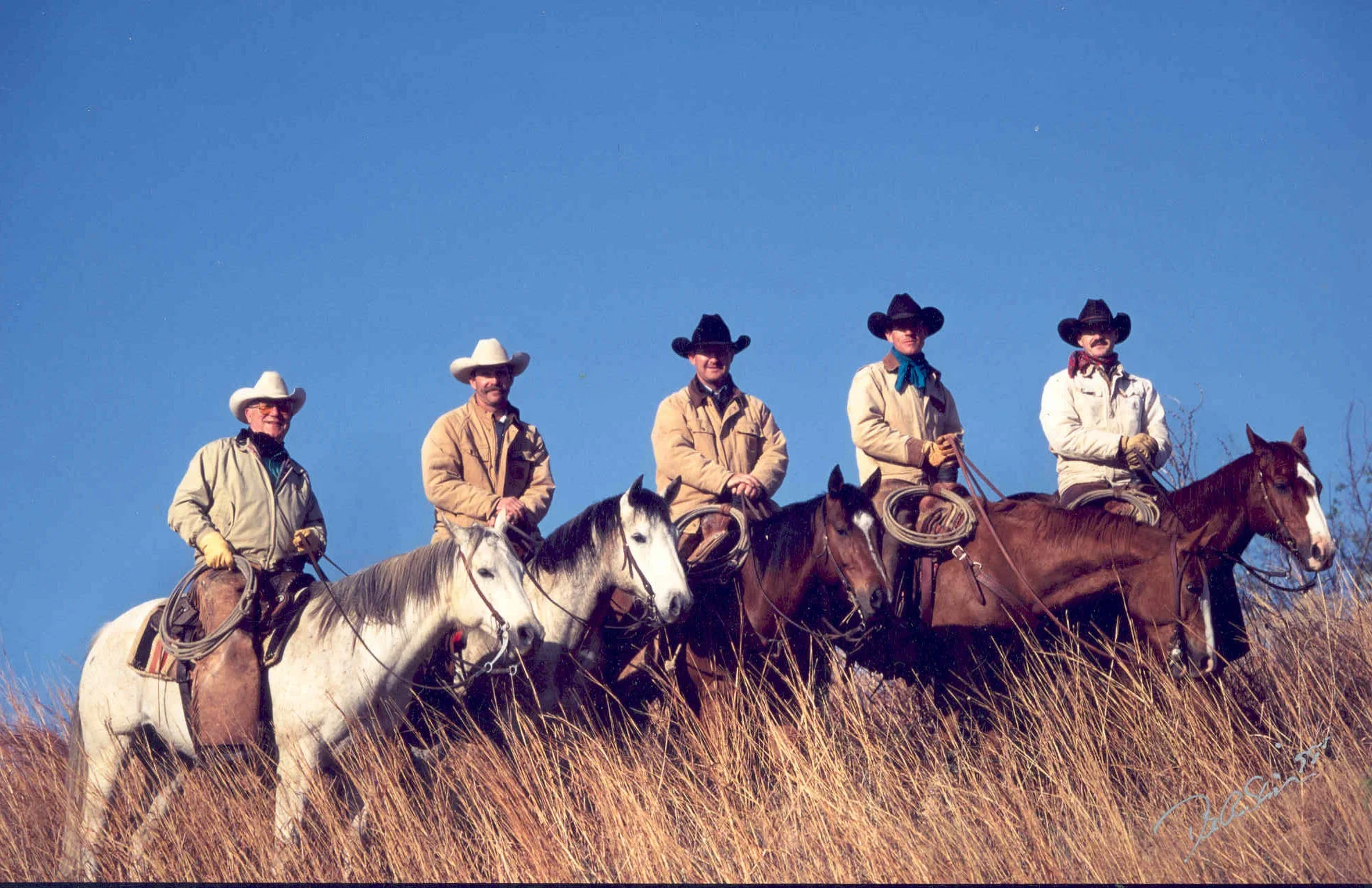
Leadership Carried Through Generations
The Brown family’s service to the Quarter Horse industry did not end with R.A. Brown Sr. His son, R.A. “Rob” Brown Jr., continued that commitment, serving as AQHA president in 1995 and entering the American Quarter Horse Hall of Fame in 2004. Together, they became only the second father-and-son pair to share that honor.
The ranch’s influence was also being proven through the horses themselves. During the 1960s and 1970s, R.A. Brown Ranch ranked among AQHA’s Top 25 breeders of Register of Merit performance horses eight times—even though the ranch did not maintain a show string of its own. Nearly all those horses were purchased, trained and shown by other people.
That has always been a meaningful part of the R.A. Brown Ranch story: breed a horse with the ability to succeed, place it in capable hands and take pride in watching someone else reach a goal with a horse carrying the RAB legacy.
In 1997, R.A. Brown Ranch was recognized as an inaugural AQHA Legacy Award recipient. One year later, the ranch received the AQHA Best Remuda Award, honoring a breeding program built not simply around the show pen, but around generations of useful horses doing real ranch work.
Built One Thoughtful Cross at a Time
The R.A. Brown Ranch remuda was never built around a passing trend. It was developed one generation and one intentional cross at a time.
The standard has remained remarkably consistent: a good mind, sound feet and bone, stamina for a long day, natural cow sense, athletic ability and a willing disposition. Color and eye appeal have always been appreciated, but usefulness has never been negotiable.
Just as important has been the strength of the maternal line. Some of the most influential stallions in ranch history were used for only a few seasons, but their daughters and granddaughters carried those traits forward. The broodmare band became the living record of each generation’s decisions—and the foundation for the next.
The Foundation Years
Following Skeet came Black Hancock, a son of Joe Hancock acquired from the 6666 Ranch after injury had diminished his value in the eyes of others. R.A. traded $50 and 100 bushels of oats for the stallion, then nursed him back to health. Though Black Hancock’s breeding career was brief, his influence was significant. He sired Brown’s Firefly, the 1946 Grand Champion at Denver, who sold to Haythorn Land & Cattle Co. for an extraordinary $5,000. He also sired Splitty Hancock, whose offspring became known for their outstanding minds.
Tubal Blake and Joe Bailey Rickles followed in the late 1940s, adding the heart, stamina and foundation blood that would remain important to the ranch for decades.
The Blue Gold and Eddie Influence
In the 1950s, a friendship with the 6666 Ranch helped bring one of the most important stallions in R.A. Brown Ranch history to Throckmorton. As a gesture of appreciation to R.A., Miss Anne Tandy directed ranch foreman George Humphreys to select the best prospect from Blue Rock’s first colt crop for the Brown family.
That colt was Blue Gold, by Blue Rock and out of a Hollywood Gold mare.
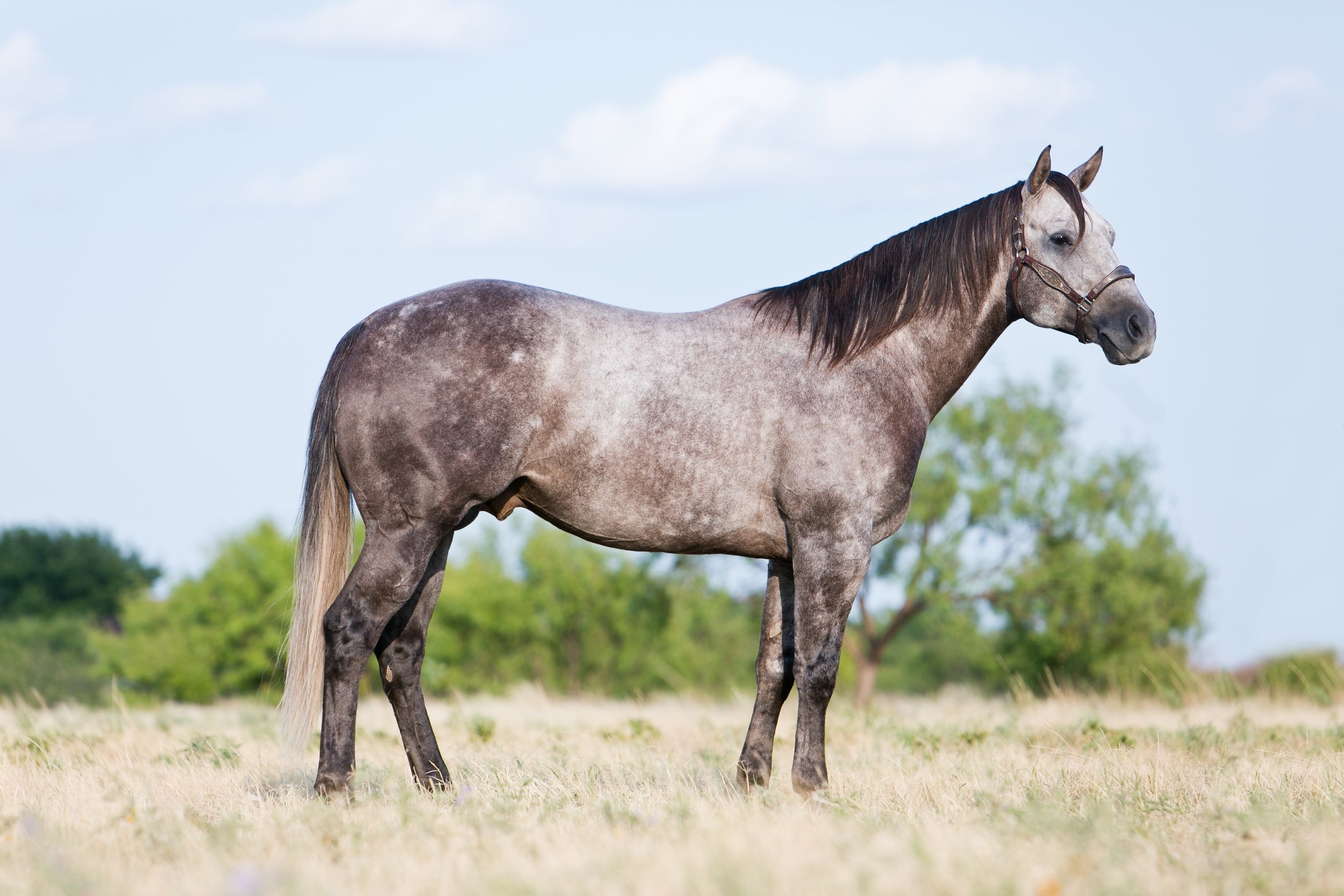
The eye-catching gray stallion possessed tremendous cow sense and became a cornerstone of the program. His influence can still be seen in the pedigrees—and in the gray horses—found in the R.A. Brown Ranch remuda today. In 2007, Breyer Horses honored him with the “Blue Gold Family” as part of its Remuda series.
During the severe drought of the 1950s, R.A. sent a small group of mares to the Haythorn family in Nebraska on shares. The half-Eddie mares that later returned to Texas were crossed with Blue Gold, producing a set of exceptionally quick, talented cow horses. Those mares became a lasting base for the broodmare band. Half-Eddie stallions Edds Blake and Eddie Hancock further strengthened that influence.
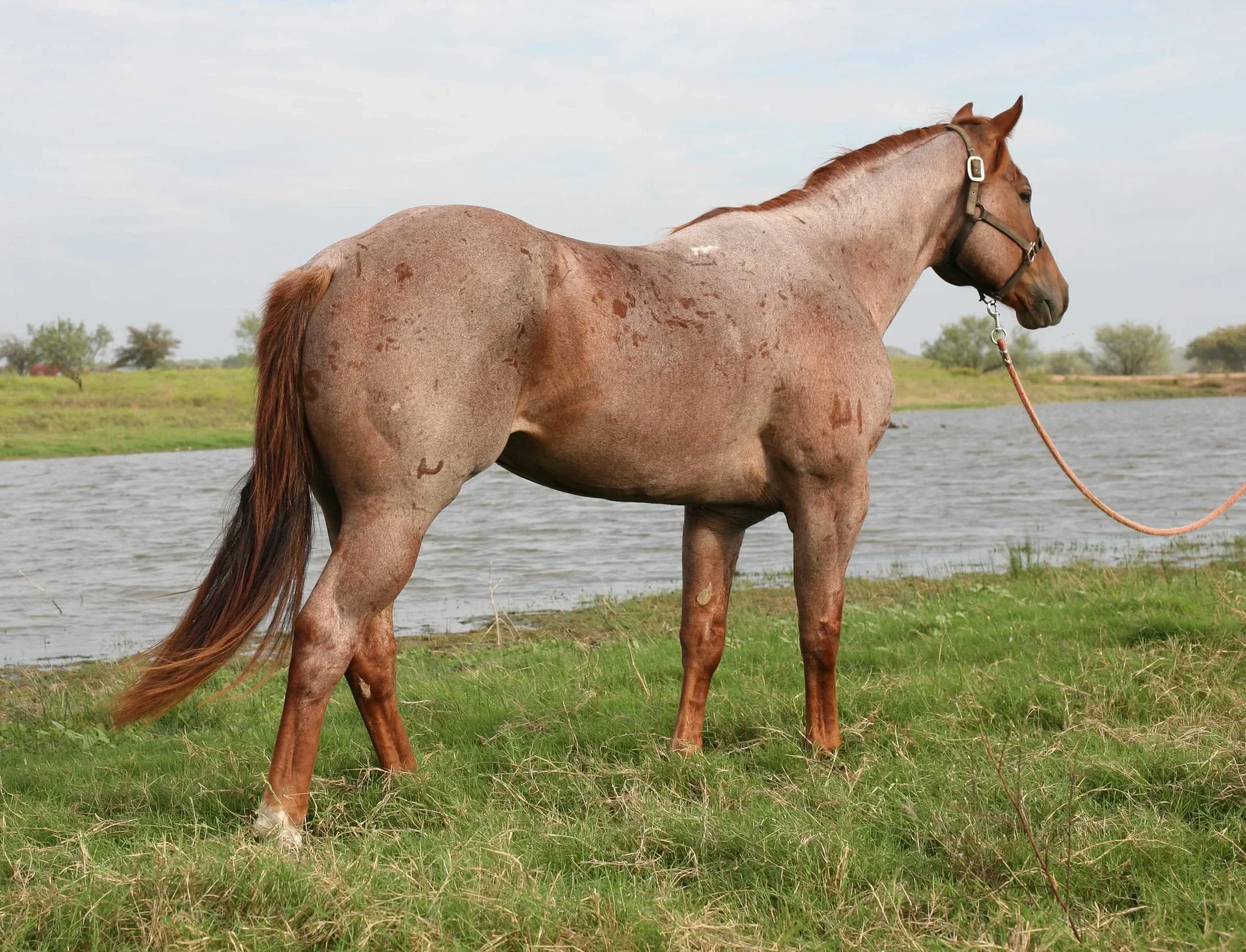
In the late 1960s and early 1970s, Eddie Red Rose added exceptional muscle, substance and performance ability. Crossed on Blue Gold daughters, he produced horses that reached winner’s circles across the country and helped establish the ranch as a nationally recognized breeder of performance horses. Two Rocks, acquired from the 6666 Ranch in 1970, also crossed successfully on the Blue Gold–Eddie mares.
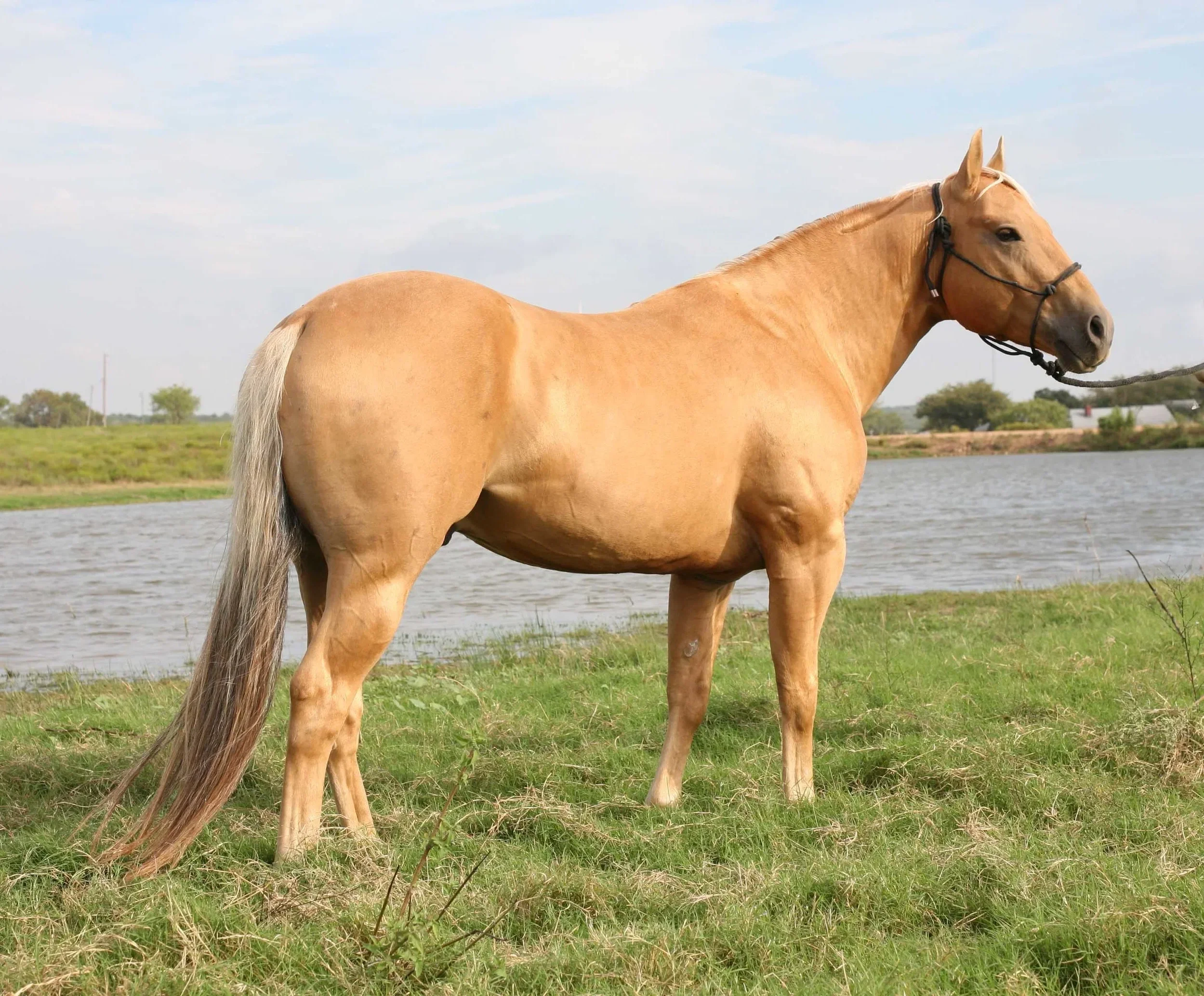
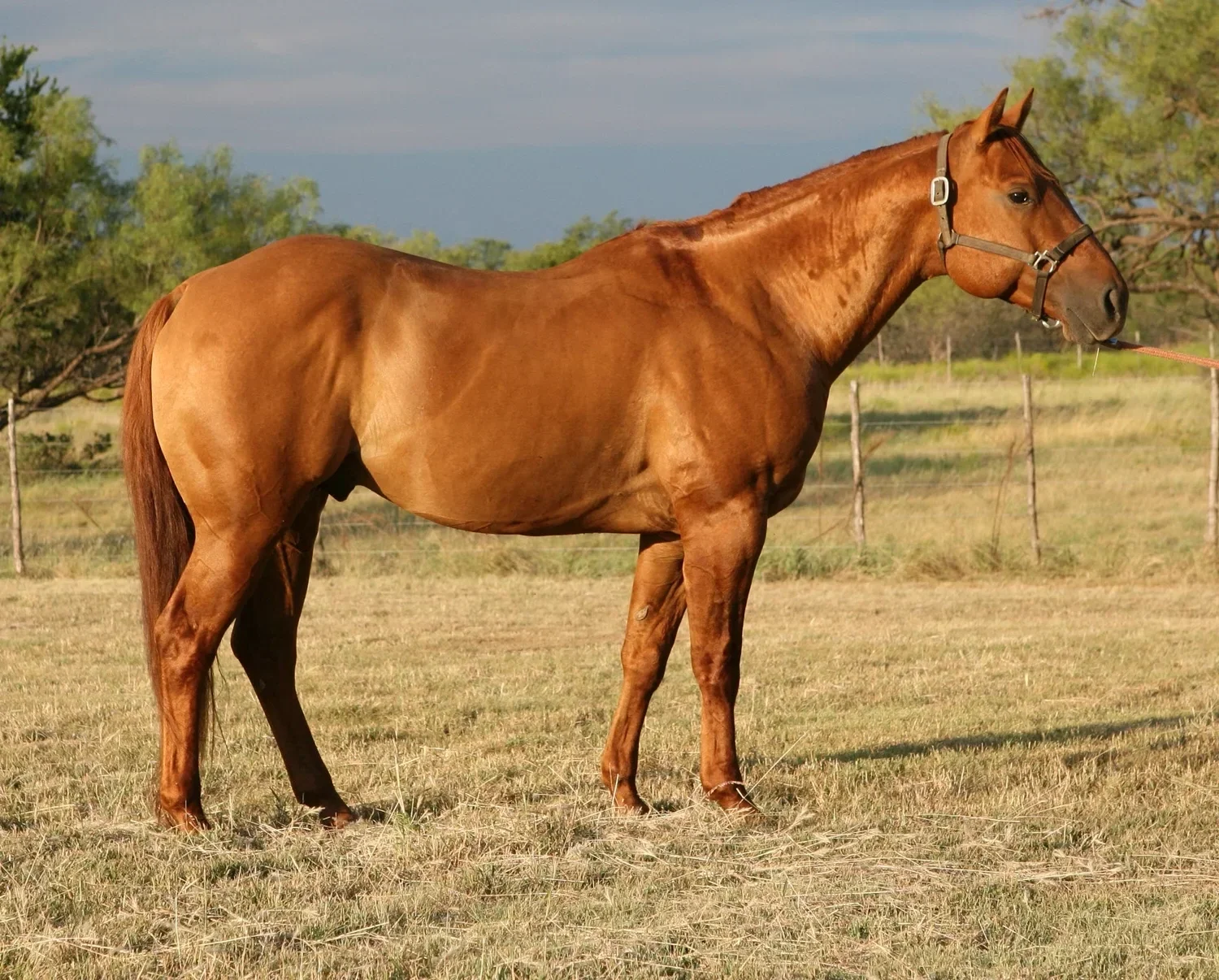
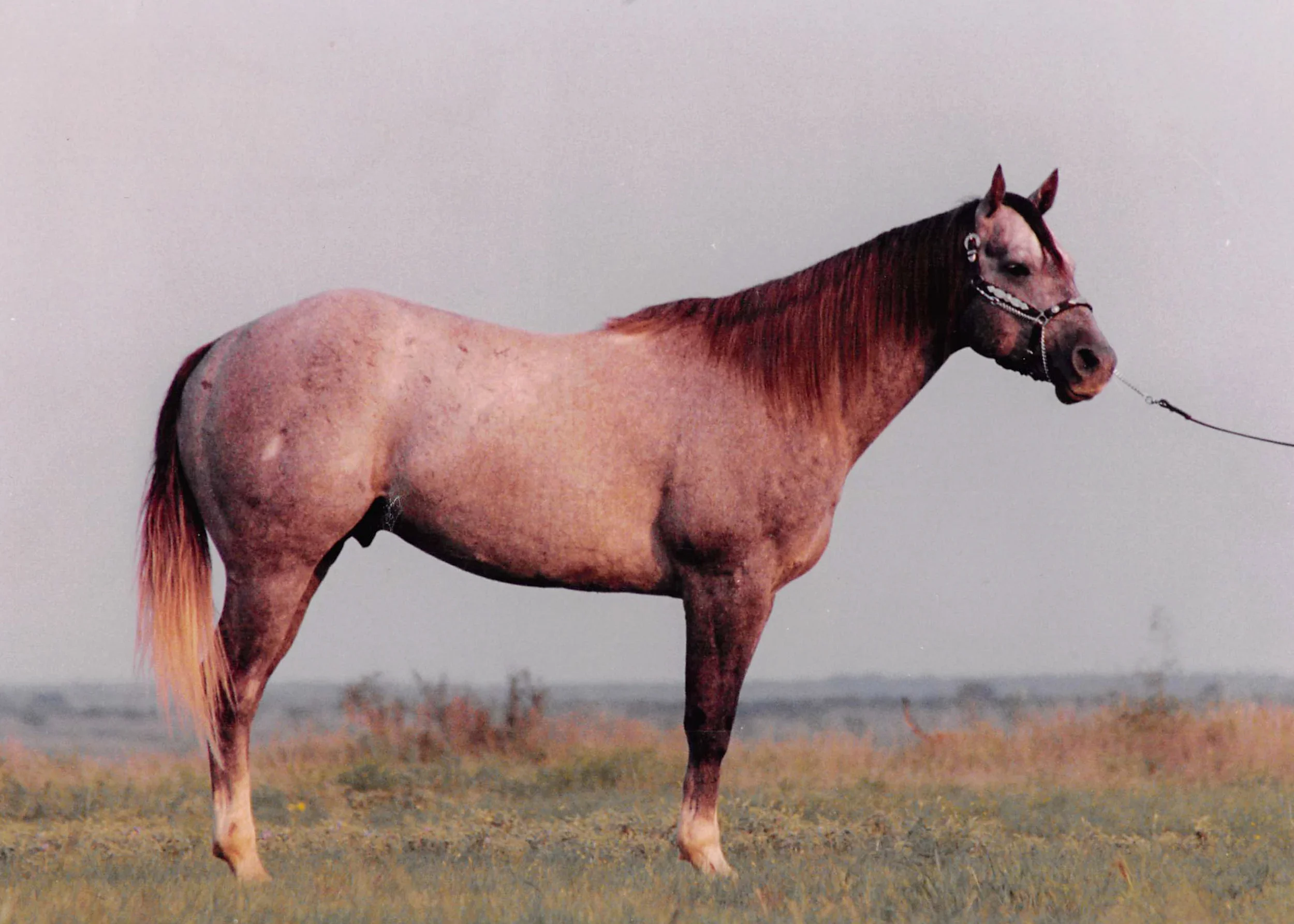
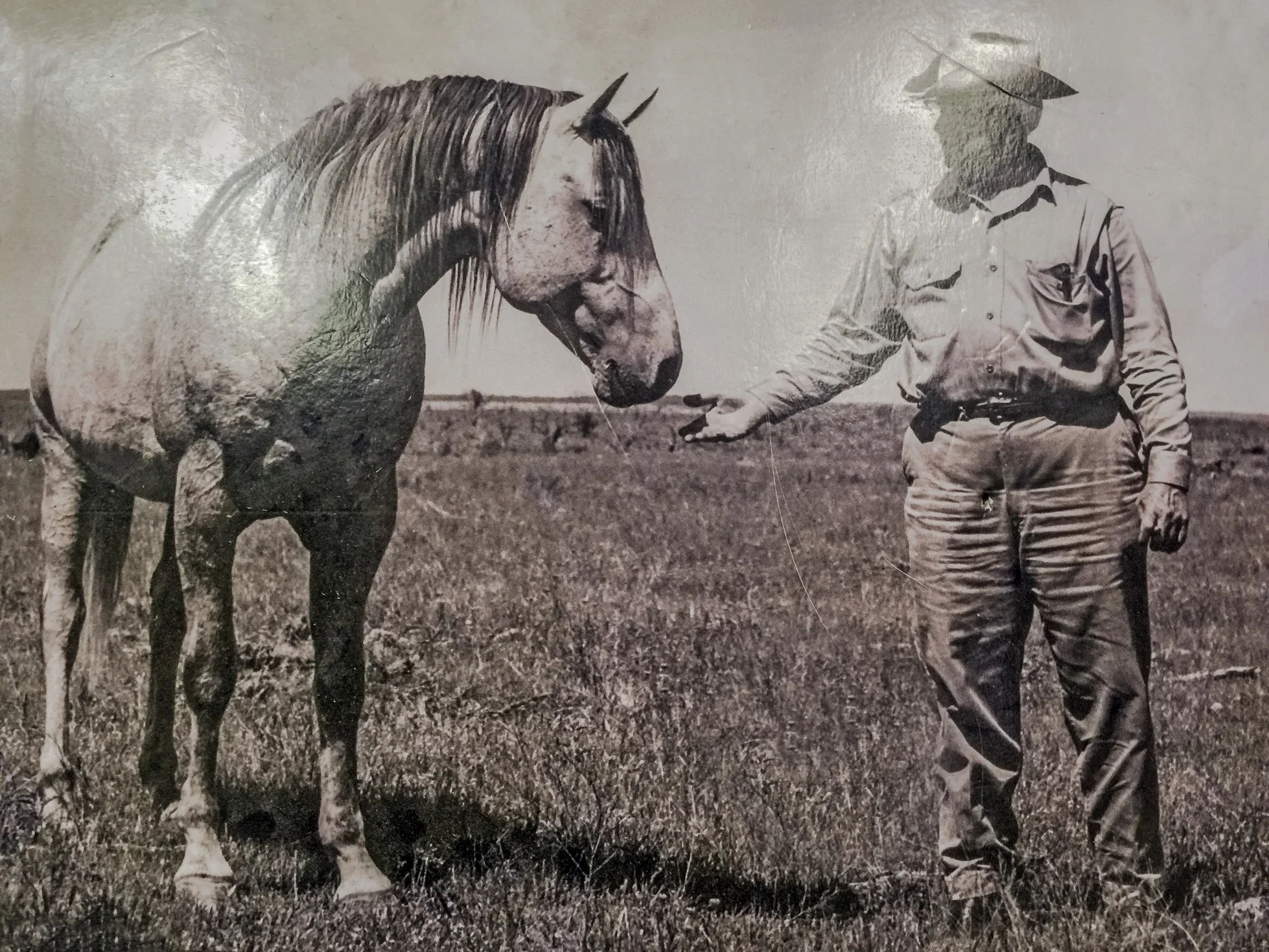
R.A. Brown with legandary stallion BLUE GOLD
Preserving the Foundation, Adding the Future
The late 1970s through the 1990s brought stallions selected to complement the strength of the existing mare band. Four Y Five and Smooth At Heart left behind hardworking geldings and influential daughters. Zans Blue Diamond, a grandson of Zan Parr Bar, was used for only two breeding seasons before an untimely death, but ten retained daughters carried his trainable mind and excellent disposition forward.
Cadillac 7633 brought the Blue Gold–Eddie influence back through the Krebs Ranch, while Tenino Tough, purchased from the 6666 Ranch in 1995, introduced Little Peppy and Doc Bar breeding. These were not changes in direction; they were carefully chosen additions to a foundation already proven by decades of use.
Later stallions—including Docen Eddy, Gold Peppy Freckles, Hesa Firefly, Blue Hancock Eddie, Little Twistin Juan, Hesa Eddie Hancock, CGB Colonel Jazz, Seven S Keota and Take A Pick —continued the same pattern. Each was selected for traits that mattered: cow sense, athleticism, bone, movement, trainability, disposition and the ability to sire horses people could use.
Some proved themselves in the show pen or roping arena. Others worked alongside the ranch cowboys when they were not breeding mares. Several did both. Their daughters became broodmares, their sons became dependable geldings and their influence became another layer in a program designed to last.
The Old and the New
Today, the R.A. Brown Ranch broodmare band represents generations of continual selection. It carries the blood of the ranch’s foundation horses while incorporating proven modern performance genetics with care and purpose.
The goal is not to chase what is fashionable. It is to preserve what has always mattered and improve it for the next generation.
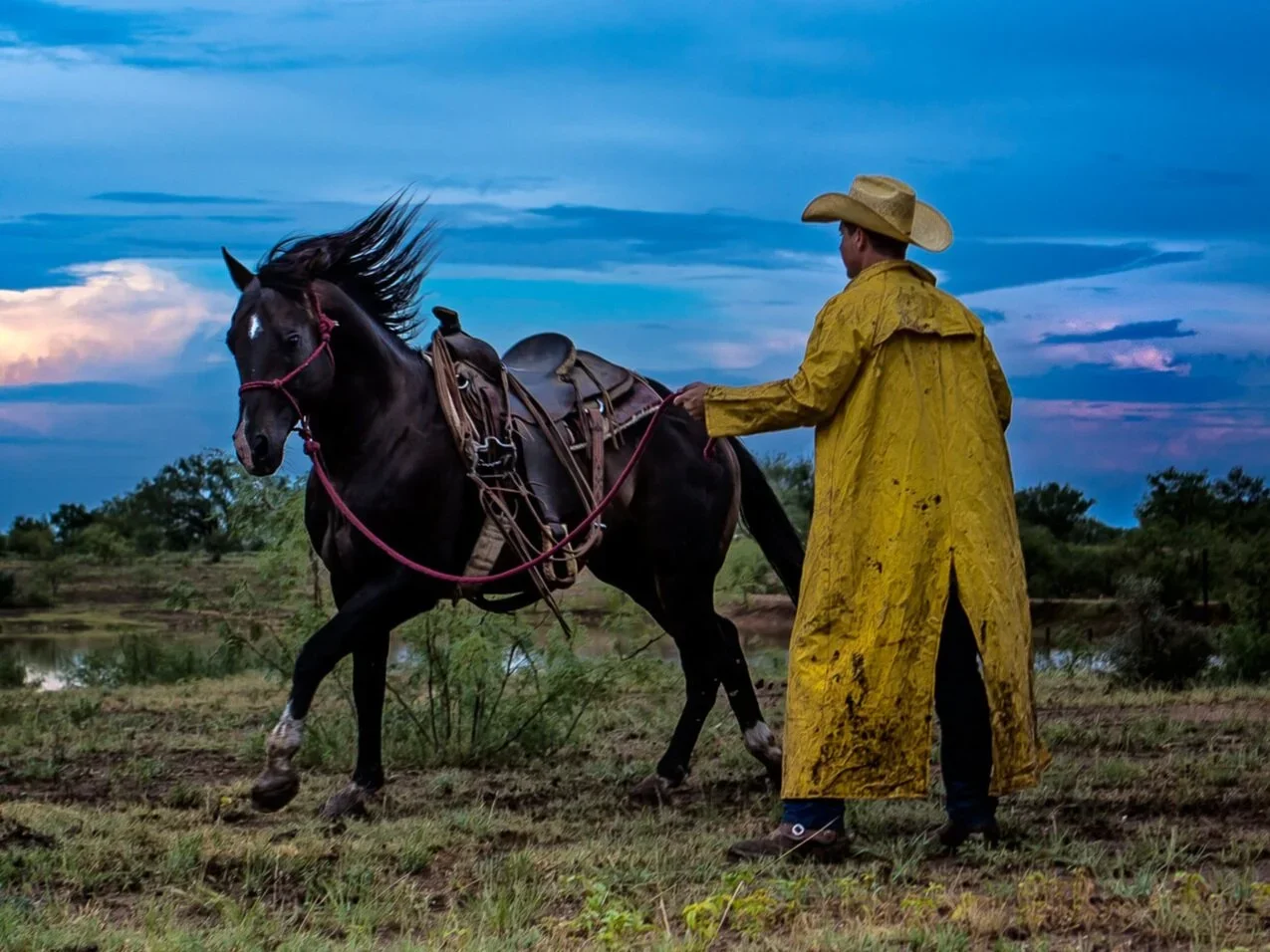
RAB horses are still expected to be functional athletes—good-minded, durable and capable of thriving in the tough West Texas country. They should have the cow sense and stamina to be useful ranch horses, along with the ability to excel when their path leads to the cow horse arena, roping pen, ranch versatility competition or rodeo arena.
Not every horse will collect a title, but every breeding is made with the belief that the resulting horse should have a job, a purpose and the tools to do it well.
A Legacy Still Being Written
For the Brown family, legacy is not something preserved behind glass. It is seen in a broodmare raising her next foal, a ranch gelding carrying a cowboy through a long day, a young horse beginning its training and an RAB-bred athlete succeeding for a new owner.
It lives in the old bloodlines that still matter, the new crosses made with intention and the family members who continue asking the same question generations before them asked:
Will this mating produce a better, more useful horse?
Nearly a century after R.A. Brown Sr. began shaping the remuda—and generations after he helped give the American Quarter Horse a name—the commitment remains the same. Raise honest horses. Build on strong maternal lines. Let performance prove the breeding. And leave the next generation a foundation worthy of carrying forward.
At R.A. Brown Ranch, the Quarter Horse legacy is not only where we have been. It is what we are still building.
Timeline
Late 1920s — R.A. Brown Sr. returns to Throckmorton and begins shaping the ranch remuda.
Foundation Era — Yellow Wolf, Skeet, Black Hancock, Tubal Blake and Joe Bailey Rickles establish the early program.
AQHA Leadership — R.A. Brown Sr. helps found AQHA and serves the Association until 1965.
1950s — Blue Gold and the Eddie mares create a lasting foundation of cow sense, speed and stamina.
1960s–1970s — R.A. Brown Ranch ranks among AQHA’s Top 25 breeders of Register of Merit horses eight times.
1988 — R.A. Brown Sr. is inducted into the American Quarter Horse Hall of Fame.
1995 — R.A. “Rob” Brown Jr. serves as AQHA president.
1997 — R.A. Brown Ranch receives an inaugural AQHA Legacy Award.
1998 — The ranch is recognized with the AQHA Best Remuda Award.
2004 — Rob Brown Jr. joins his father in the American Quarter Horse Hall of Fame.
2017 — Resident stallion, TAKE A PICK, wins the World in AQHA Versatility Ranch Horse.
2023 — Ranch raised, RAB MISS BLUE BAYOU and Lanham Brown win the NRCHA NP Snaffle Bit Futurity.
2025 — SEVEN S RAZZBERRY, earns her NRCHA Supreme Reined Cow Horse Award along with the World Championship in the Open Bridle.
2025 — HESA TWISTED BET, a 2016 ranch gelding, was named the Top Horse at the 2025 WRCA (Working Ranch Cowboys Association) World Championship.
2026 — HESA TWISTED BET, named the 2026 World’s Greatest Horseman NP (for the 2nd time).
Today — The family continues blending proven ranch bloodlines with modern performance genetics to produce useful, good-minded athletes.